How many calls are you missing?
How much are missed calls costing your business? Learn what counts as a missed business call, how to estimate the revenue impact, why calls go unanswered and practical ways to reduce missed calls with better call handling and overflow support.
Most businesses know they get calls. Far fewer know how many they miss. That’s the real problem, because missed calls rarely show up as a neat line on a report. They disappear quietly, along with the enquiry, the booking, the sale, or the chance to make a strong first impression.
If you’re running a busy business, it’s easy to assume the odd missed call is unavoidable. Sometimes it is. But when missed calls become a pattern, they start to shape how your business performs and how your brand is experienced. That’s why it’s worth asking a simple question: how many calls are you actually missing, and what might that be costing you?
What counts as a missed business call?
A missed call is not just a phone that rings out. In business terms, it can include any call that isn’t handled properly first time. That might be a call no one answers, a caller sent to voicemail who never leaves a message, a delayed response after the moment has passed, or a call that gets transferred around without ever reaching the right person.
From the customer’s point of view, the detail hardly matters. If they wanted help and didn’t get it, the experience feels like a missed call. That’s why this issue is bigger than a phone system problem. It’s really a visibility, service and revenue problem rolled into one.
Why missed calls matter more than most businesses realise
A missed call is easy to dismiss when you’re in the middle of everything else. The trouble is, callers don’t see it that way. To them, it can feel like your business was unavailable, too busy, or simply hard to reach. In competitive markets, that often means they move on quickly.
That’s what makes missed calls so costly. You’re not only losing the call itself. You may also be losing the chance to win a new customer, retain an existing one, or resolve an issue before it grows into something bigger. Sometimes the cost is immediate. Sometimes it shows up later in lower trust, slower growth or weaker conversion over time.
If a customer can’t reach you when they’re ready to act, the opportunity doesn’t usually wait around.
For many business owners, that’s the most uncomfortable part. Missed calls create invisible loss. You rarely know who didn’t call back, what they might have spent, or how many future opportunities were tied to that one interaction.
What missed calls can mean for your business
The impact of missed calls tends to show up in three places. The first is revenue. If a new enquiry never gets through, there’s no opportunity to convert it. The second is reputation. If customers struggle to reach you, it chips away at confidence very quickly. The third is operational drag. Teams end up chasing missed contacts, dealing with avoidable frustration, and spending more time recovering than responding well in the first place.
That’s why this isn’t just a front desk issue. It affects sales, customer service and overall business performance. In some sectors, especially where calls are urgent or high intent, even a small number of missed enquiries can have a surprisingly outsized effect.
So how do you estimate how many calls you’re missing?
You don’t need perfect data to get a useful picture. Start with the basics. How many inbound calls do you receive in a typical day or week? When are your busiest periods? How often are calls going unanswered because the team is in meetings, already on the phone, out of hours, or simply stretched too thin?
Once you’ve got a rough missed call number, the next question is what those calls are worth. If you know your average conversion rate and average order value, you can begin to estimate the commercial impact. Even a broad calculation can be eye-opening, especially if you’ve never looked at the issue this way before.
A simple way to think about it
A useful estimate often comes down to four things:
- How many calls you receive
- What proportion you miss
- How many of those missed calls would likely have converted
- What an average customer is worth to your business
Why businesses miss calls in the first place
Most businesses don’t miss calls because they don’t care. They miss them because the day gets busy and live conversations don’t always arrive at convenient moments. Teams are already helping customers, sitting in meetings, covering multiple roles or trying to keep pace with peaks in demand.
Sometimes the issue is timing. Calls come in during lunch breaks, early mornings, evenings or weekends. Sometimes it’s process. There’s no clear ownership, no overflow plan, or no reliable way to make sure calls are answered consistently. Often it’s simply a capacity gap that grows gradually until it becomes normal.
That’s why it helps to look at missed calls without blame. The goal isn’t to catch people out. It’s to understand where calls are slipping through and put the right support around the business.
What good looks like when calls are handled properly
When calls are being answered consistently, the benefits are usually felt quite quickly. New enquiries are captured more reliably. Customers get help when they need it. Teams spend less time firefighting. The business starts to feel more responsive, more organised and easier to deal with.
It also gives you better visibility. Instead of guessing whether missed calls are a problem, you can start measuring them, understanding patterns and making more informed decisions about where support is needed most.
The calls you miss are the ones you can’t afford to ignore
Missed calls are easy to underestimate because they don’t always leave a trail. But that’s exactly why they matter. If customers can’t reach you at the moment they’re ready to buy, book or ask for help, the loss often happens silently.
Once you can see the scale of the issue, you’re in a much stronger position to do something about it. That might mean improving internal handling, adding overflow support, or simply getting a clearer picture of what’s happening today.
Frequently asked questions
- How can I tell how many calls my business is missing?
Start by reviewing your inbound call volumes, unanswered call reports and busy periods. Even a rough estimate can help you understand whether missed calls are a minor issue or a bigger commercial problem.
- Do missed calls really affect revenue?
They can, especially if calls are high intent and linked to bookings, enquiries or sales. A missed call may mean a lost opportunity that simply goes elsewhere.
- What’s the best way to reduce missed calls?
The best approach depends on your business, but common fixes include improving call handling processes, reviewing capacity, and putting overflow or answering support in place during busy periods or out of hours.
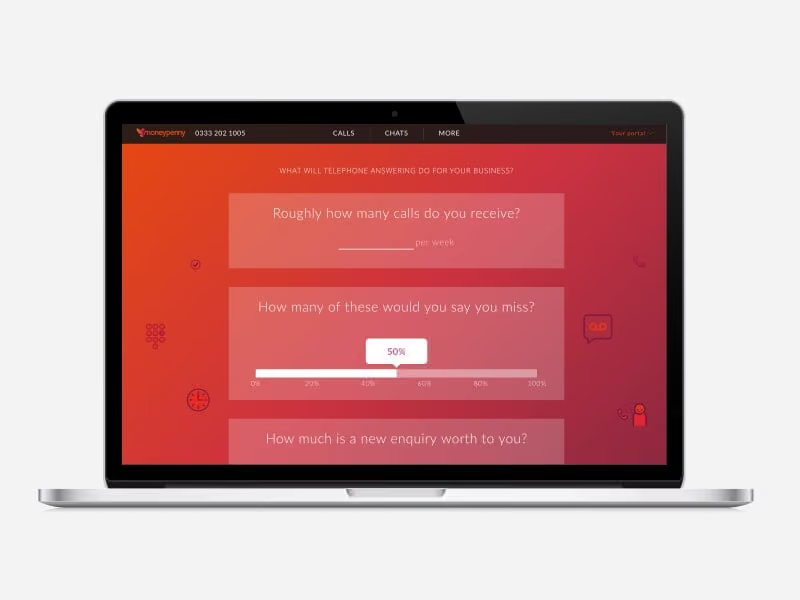
If you want to start somewhere practical, the calculator is a good first step. It turns a vague concern into something more tangible, and once you’ve got that, the path forward becomes much clearer.





Get your quote from the UK’s #1 provider today
Provide us with a few details and we’ll contact you to explain how Telephone Answering will work for your business. Alternatively, call 0333 202 1005 to find out more.
What to expect:
- Thousands of businesses on board
- Unmatched sector expertise
- Award-winning culture